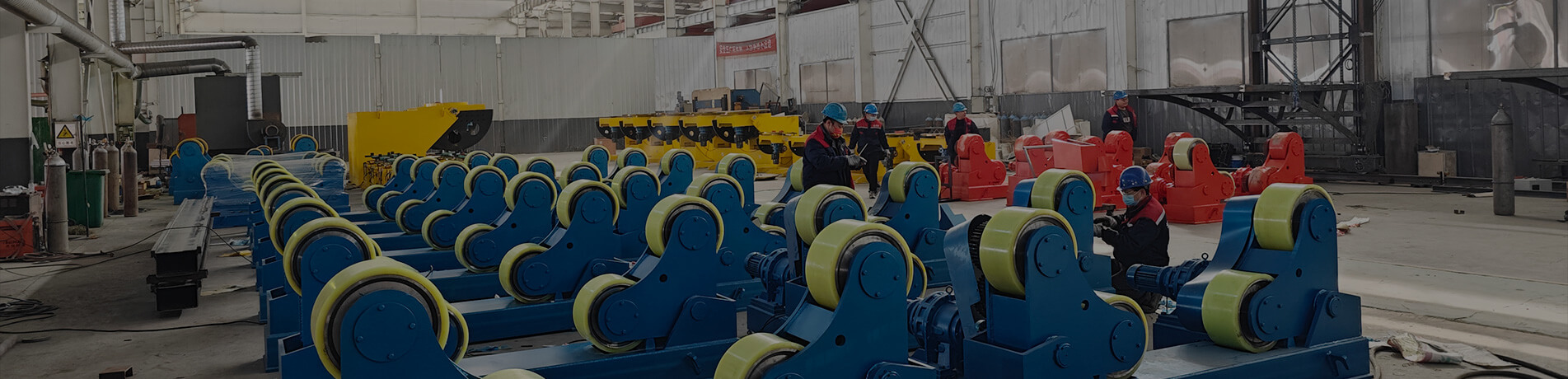
In automated welding equipment, the welding manipulator serves as the core carrier for achieving high-quality welding, while the boom and column act as the “skeleton” supporting the stable operation of the entire system. During long-term continuous work, the equipment needs to bear the welding head, wire feeding system, cable drag chain and various accessories, and complete precise lifting and telescopic movements. If the structural rigidity is insufficient, slight displacement of the torch may occur, and these subtle changes will be directly reflected in the weld formation, affecting the overall quality and consistency of the product.
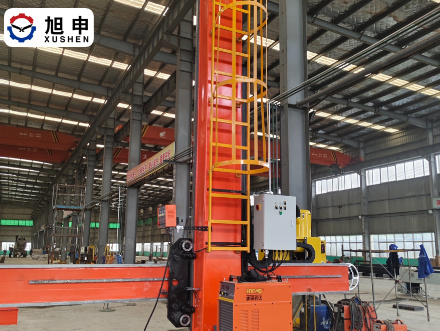
For workpieces such as storage tanks, pressure vessels and large cylinders, the welds are usually long and require high precision. Any vibration or deformation may lead to uneven bead width, fluctuation of penetration depth or even welding defects. A high-rigidity boom structure can maintain a stable posture under full load, ensuring that the torch is always aligned with the weld center; a solid and reliable column provides stable support for lifting and rotation, guaranteeing accurate positioning even under complex working conditions. This not only improves welding quality, but also effectively reduces rework rate and manual intervention costs.
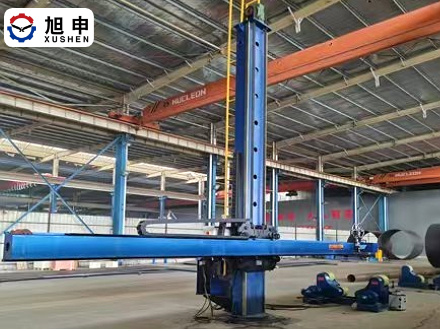
For these reasons, more and more manufacturers regard the rigidity design of the boom and column as an important factor when selecting welding manipulators. Through structural optimization and high-standard manufacturing processes, the equipment can maintain stable operation under large stroke and continuous working conditions, providing reliable positioning accuracy and repeatability for the welding process. Xushen Intelligent Equipment has long focused on the field of welding automation, continuously accumulating experience in manipulator structural design and manufacturing technology, and helping customers achieve higher-quality automated welding production with stable and reliable product performance.

 English
 Русский
 中文
中文