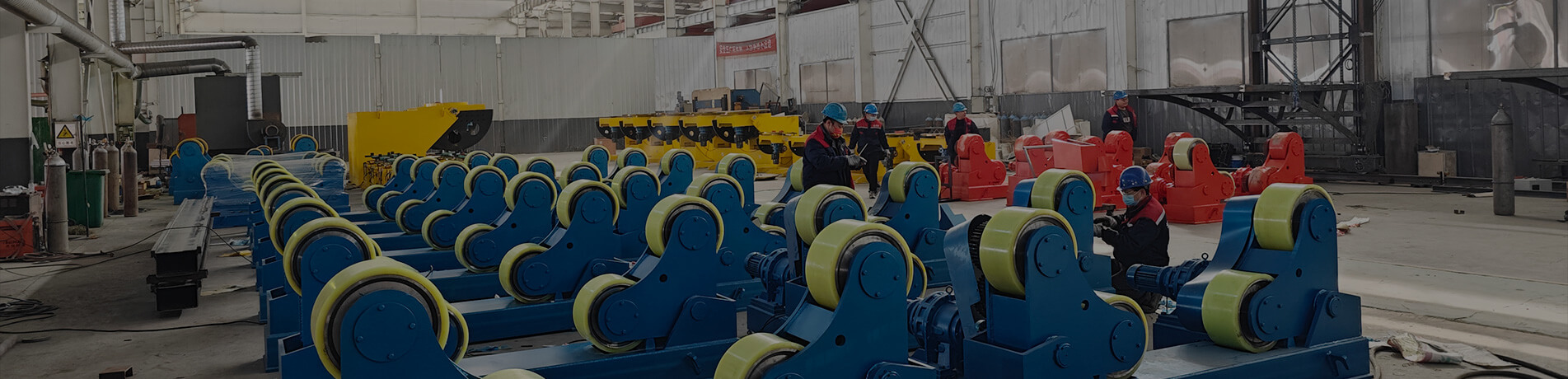
Welding rotators are essential equipment for achieving automated welding of pressure vessels, storage tanks, heat exchangers, pipes, and other large cylindrical workpieces. In submerged arc welding (SAW) applications, the stability of workpiece rotation directly affects welding speed, heat input control, and final weld quality. By supporting and rotating large cylindrical components, welding rotators help maintain a consistent welding position and improve the continuity and reliability of the welding process.
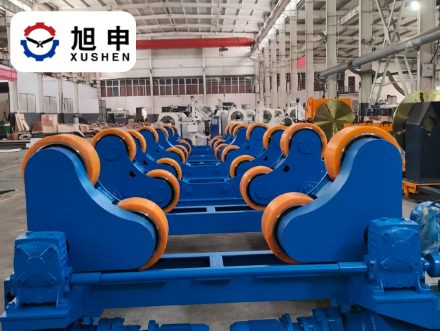
High-performance welding rotators are equipped with variable frequency speed control, precision drive systems, and heavy-duty roller structures to achieve smooth rotation and accurate speed adjustment. During long circumferential welding operations, stable rotation speed ensures consistent welding parameters and reduces variations in heat input caused by speed fluctuations. As a result, welding defects such as lack of fusion, uneven weld formation, excessive heat input, and welding deformation can be effectively reduced. In addition, anti-drift systems prevent axial movement of large workpieces, ensuring accurate weld positioning and improving welding stability.
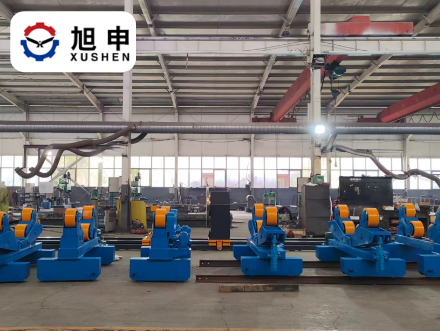
With the development of automated welding technology, modern welding rotators are no longer just workpiece turning devices but also important components of integrated welding systems. By connecting with welding manipulators, SAW power sources, seam tracking systems, and PLC control systems, welding rotators can achieve coordinated control of rotation speed, welding torch movement, and welding parameters. For high-demand manufacturing industries such as pressure vessels, heat exchangers, and large storage tanks, reliable welding rotators help improve production efficiency, reduce manual operation errors, and achieve more stable and high-quality welding results.

 English
 Русский
 中文
中文