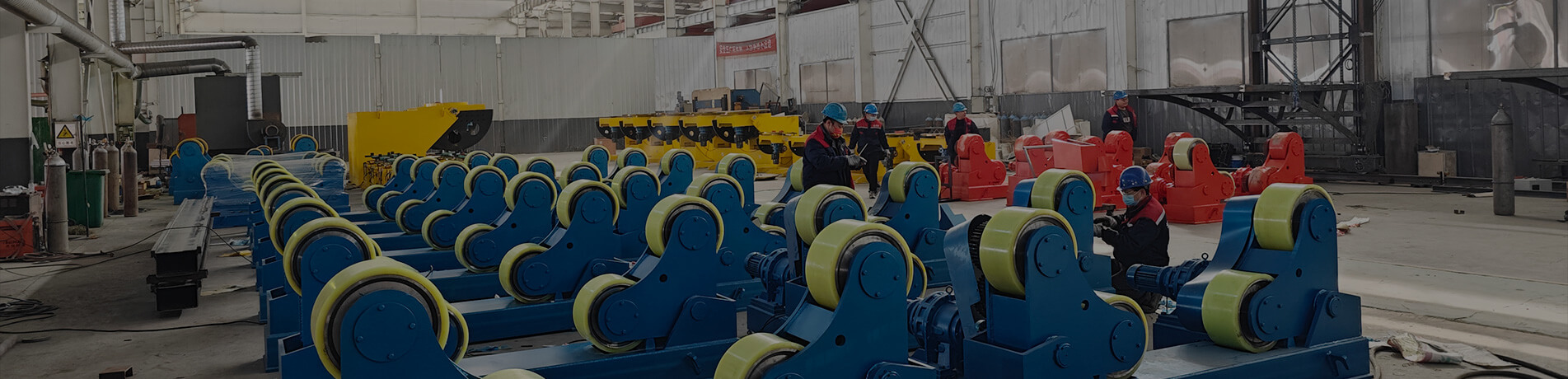
In the welding production of cylindrical workpieces, welding rotators are indispensable auxiliary equipment. Whether in pressure vessel manufacturing, steel structure fabrication, or industries such as wind power equipment and storage tanks, cylindrical workpieces require stable support and uniform rotation during welding. Since workpiece diameters often vary significantly between different projects, equipment without flexible adjustment capability may directly affect welding stability, weld quality, and production efficiency. Therefore, the structural design of welding rotators must include adjustment functions to accommodate workpieces of different diameters and meet diverse production requirements.
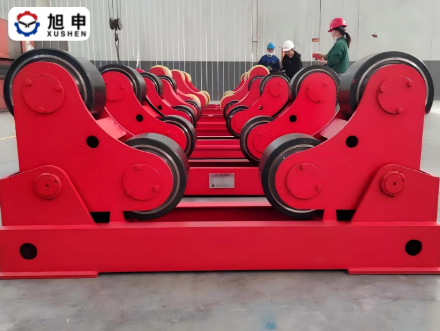
From a structural perspective, welding rotators are generally composed of a drive unit and an idler unit. The main adjustment method is to change the center distance between the two sets of rollers through bolt adjustment or hydraulic adjustment, allowing the equipment to adapt to workpieces of different diameters. The drive unit is equipped with a motor, reducer, and control system. Its primary function is to drive the rotation of the workpiece and maintain a stable rotational speed during the welding process, ensuring consistent welding performance. The idler unit mainly provides support and works together with the drive unit to offer reliable load-bearing capacity, preventing displacement or vibration during rotation.
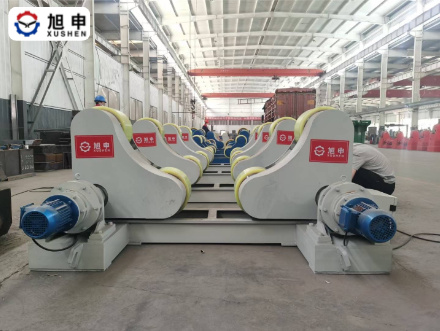
In practical production applications, by properly adjusting the roller center distance, welding rotators can flexibly accommodate cylindrical workpieces of different specifications, ranging from medium to large diameters. In addition, some equipment is equipped with buffering mechanisms or self-aligning designs. When slight deviations occur during rotation, the equipment can automatically perform minor adjustments to keep the workpiece rotating smoothly. This not only improves welding stability but also helps ensure consistent weld formation quality. With the continuous development of welding automation technology, the adaptability and automation level of welding rotators continue to improve, making them increasingly important auxiliary equipment in modern welding production.

 English
 Русский
 中文
中文