
For large cylindrical workpieces such as storage tanks and pressure vessels, support cannot simply remain the same as the workpiece size changes. Different diameters and weights affect the support height, load distribution, and rotation of the workpiece. An elevating roller stand incorporates adjustable height into the roller support system, allowing the equipment to respond to different workpiece dimensions. Once the workpiece is positioned, the rollers can be adjusted to establish a more suitable support arrangement, creating better conditions for rotation, fit-up, and welding.
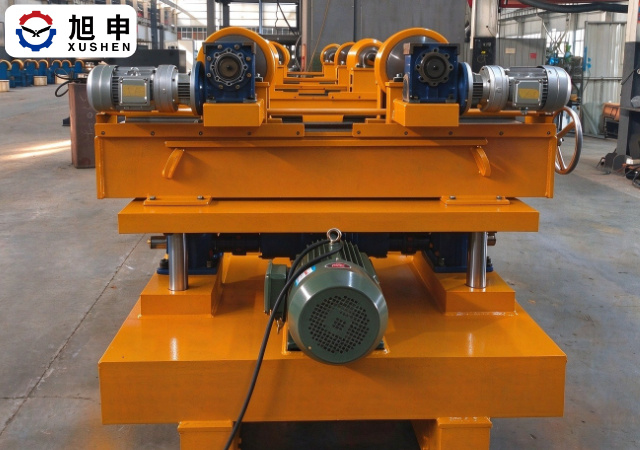
Compared with fixed-height support, the value of an elevating structure goes beyond changing the height itself. For cylindrical workpieces of different diameters, the roller position can be adjusted to maintain a suitable support condition. For larger workpieces, the support arrangement can also be adapted according to their weight, diameter, and length. Once positioned, the workpiece can be continuously rotated by the driven rollers, combining support and rotation within the same system. During circumferential welding, continuous rotation brings the welding area into a suitable position as the workpiece turns, reducing the need for repeated lifting and repositioning and making the operation more continuous.
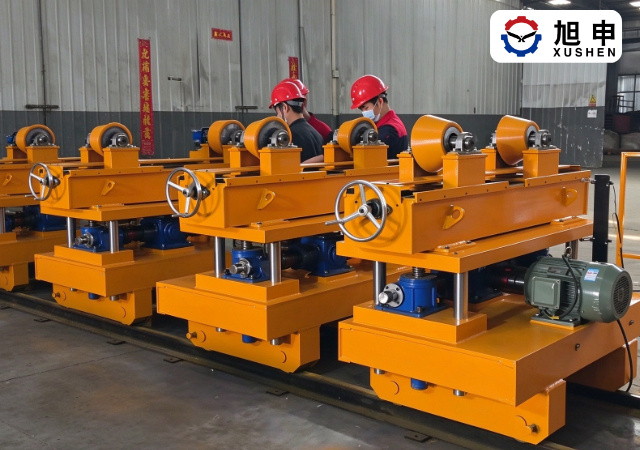
In actual production, workpieces rarely remain the same size forever. One job may involve a smaller-diameter shell, while the next may involve a much larger storage tank or pressure vessel. The adjustment range of an elevating roller stand is designed to accommodate this kind of change. The support height can be adjusted according to the workpiece, allowing the equipment to follow production requirements rather than requiring a new support solution every time the workpiece changes. For production environments handling multiple cylindrical workpiece sizes, this adaptability is an important part of the roller stand’s value.

 English
 Русский
 中文